Keep up to date with our latest news
Keep up to date with our latest news, events and announcements.
If you are controlled, hurt or frightened by your partner or a family member, remember that it is not your fault and you are not alone.
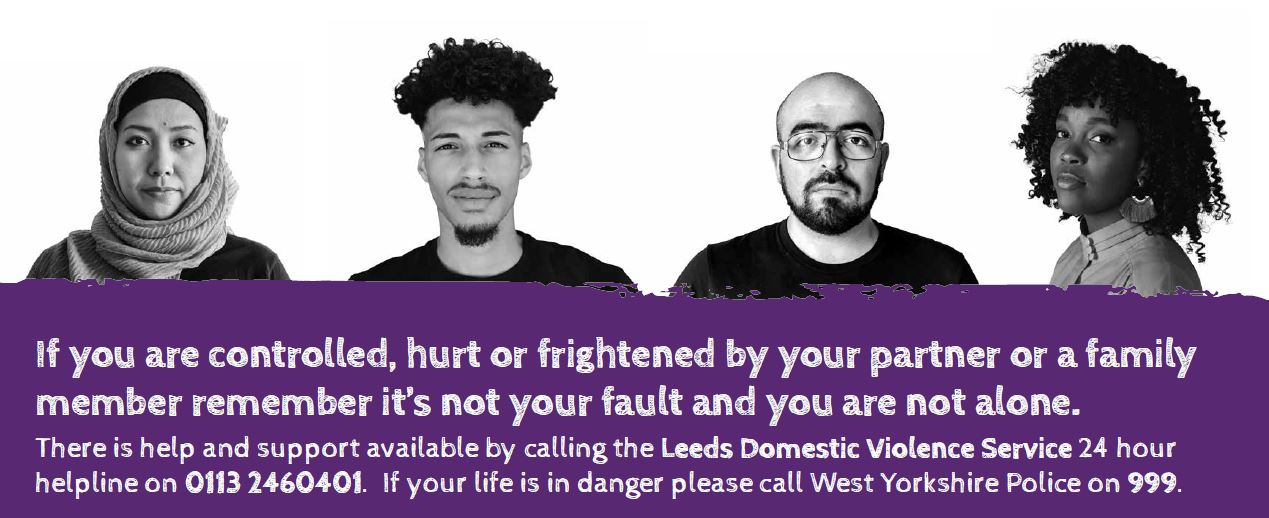
There is help and support available by calling the Leeds Domestic Violence Service 24 hour helpline on 0113 246 0401. If your life is in danger, always call West Yorkshire Police on 999.
Leeds Domestic Violence Service (LDVS) supports all people in Leeds affected by domestic violence and abuse. LDVS believes everyone has the right to live a safe and happy life, and they are here to help. Whatever you may be going through, LDVS can support you on their 24 hour helpline 0113 246 0401 or by email at
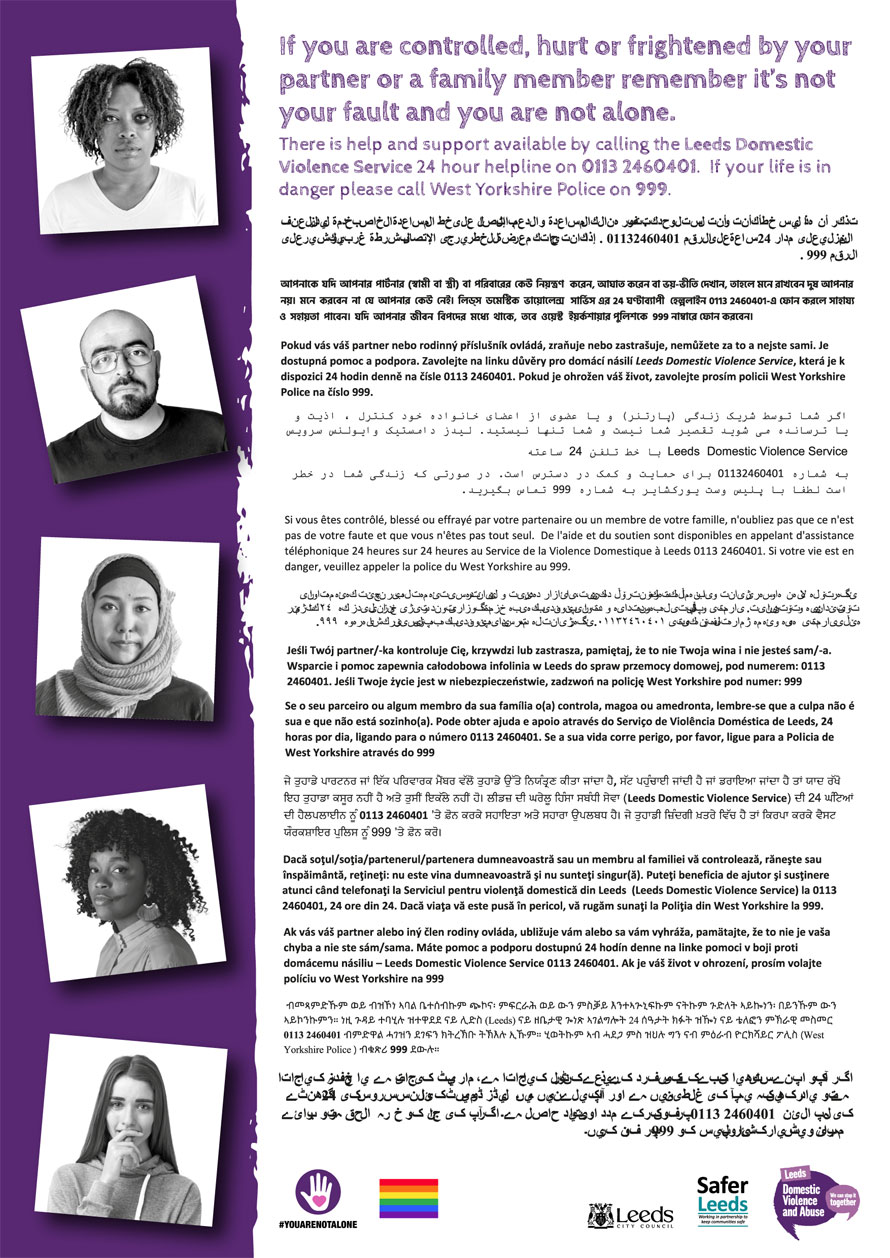
There are also several organisations that provide help and support to you if you are experiencing domestic abuse:
- Behind Closed Doors can help with prevention, practical help and recovery from domestic abuse in Leeds.
- Leeds City Council one-minute guide: Leeds Domestic Violence Service.
- Mindwell Leeds Domestic Violence Service which actively encourages people from LGBT+ communities to access their support.
You can also contact the following organisations in Leeds:
- Men's Advice Line UK is for male victims of domestic abuse and offers confidential advice, non-judgmental support, practical information and help.
- Leeds Women's Aid is an independent charity based in Leeds, UK, providing a range of outstanding domestic violence and abuse services.
- Age UK Leeds Domestic Violence Service - Sanctuary Support Scheme offers lots of services and support for older people and their carers.
Click here to access the one-minute guide from Leeds.gov for information and help on domestic abuse in young people's relationships.
Information on domestic abuse is also available from West Yorkshire Police if you are worried about your own behaviour. Many people think that this just involves physical violence, but it can also include psychological, physical, sexual, financial or emotional abuse.
If your life is in danger, always call West Yorkshire Police on 999.
Health for All has been supporting communities in South Leeds for 33 years, providing life and health enhancing opportunities and activities and groups in its seven local, welcoming, accessible community and family centres.
These are located in Beeston, Middleton, Holbeck, Belle Isle and Cottingley. We bring people together to achieve healthier, happier lives, with our weekly groups offering peer support, arts and crafts, singing, gardening, woodwork, yoga, tai chi and more.
Popular services provided in most of our centres include the weekly community food pantries, which individuals can join, and for a small contribution, can choose fifteen or more food items to help manage their budgets in these challenging times. Click here for more information.
Our services include the following:
- Enhance Service provides one to one support for older people to help improve their health and quality of life, enabling easier access to health services through a weekly Health Hub in a local Community Centre.
- Breastfeeding support for new mums and their babies.
- Active Club Experience (ACE ) provides fun multisport for children, as well as youth groups, and focuses on building confidence and helping teenagers make new friends.
- Better Together, which is a collaborative partnership between Health for All, St Luke’s Cares and ASHA Neighbourhood Project. We support groups for adults aimed at improving mental and physical health.
- Community groups for white British, South Asian, Chinese, Hongkongers, eastern European and African individuals.
- Bridge Service which delivers a day service and provides interesting activities for adults with learning disabilities at Holbeck Community Centre and Watsonia Café in Cross Flatts Park, Beeston.
Our weekly groups provide a friendly welcome and include refreshments, luncheon clubs and speakers with practical help and information.
We have friendly and supportive staff who build trusting relationships with individuals who require support, advice and information to help build confidence and provide essential skills.
To overcome any barriers people may face in accessing support, we run a community transport service with five minibuses and a community cab. Where needed, we can also arrange childcare or help with caring responsibilities.
We are pleased to announce Heath for All will have a stall in the waiting room at City View between 10.30pm and 12.30pm on the following dates:
- Monday 3rd August 2026
- Monday 7th September 2026
- Monday 5th October 2026
- Monday 2nd November 2026
Why not come along on one of the dates and introduce yourself to the friendly members of the Health for All team? For further dates of when Health for All will be at City View, please ask at Reception.
To view the Health for All website click here and click here to view the 2023-24 Annual Review.
For some patients, including those with work, caring responsibilities or other commitments, attending appointments during standard practice opening hours can be difficult.
The Enhanced Access Service is provided by SELGP on behalf of the Beeston Primary Care Network and operates from City View Medical Practice every Saturday.
Appointments are available between 9:00am and 3:00pm every Saturday and can be booked through the practice. When you contact us, our Care Navigation Team may offer you a Saturday appointment if this is appropriate for your needs. If a Saturday appointment would be more convenient for you, please let us know when you contact the practice.
The Enhanced Access Service aims to offer patients a greater range of appointment availability for routine health concerns at a time that may be more convenient.
The types of support available are similar to those offered during normal practice opening hours, and appointments may be available with a range of healthcare professionals, including:
- GPs
- Practice Nurses
- Healthcare Assistants (HCAs)
- Physiotherapists
- Pharmacists
- Healthy Mind Practitioners (Mental Health & Wellbeing)
What support can I access?
Cervical Screening Nurse Clinic
Saturday, 9:00am to 3:00pm (face-to-face)
GP Clinic
Saturday, 9:00am to 3:00pm (face-to-face)
Healthcare Assistant Clinic
Saturday, 9:00am to 3:00pm (face-to-face appointments for long-term condition reviews and blood tests)
If you require urgent medical advice outside of practice and Enhanced Access opening hours, please contact NHS 111.
All local pharmacies are offering the Pharmacy First service (or the similar Minor Ailments Service).
Going to your local pharmacy offers an easy and convenient way to get clinical advice on minor health concerns. Community pharmacies can offer treatment and when appropriate, some prescription medicine, for seven common conditions without patients needing to see a GP, as part of a major transformation in the way the NHS delivers care.
How it works
Simply walk into your local pharmacist and ask for some advice.
The treatment for most common conditions is about doing the right things for yourself. Your local pharmacist can now offer treatment and provide some prescription medicine for seven conditions, if appropriate, without the need for a GP appointment or prescription.
Also, remember that many pharmacies are open at weekends and evenings.
Types of conditions a pharmacist can help with
- Sinusitis (for those aged 12 years and over)
- Sore throat (for those aged 5 years and over)
- Earache (for those aged between 1 and 17 years old)
- Infected insect bite (for those aged 1 year and over)
- Impetigo (for those aged 1 year and over)
- Shingles (for those aged over 18 years old
- Uncomplicated urinary tract infections (UTIs) (for women aged 16-64)
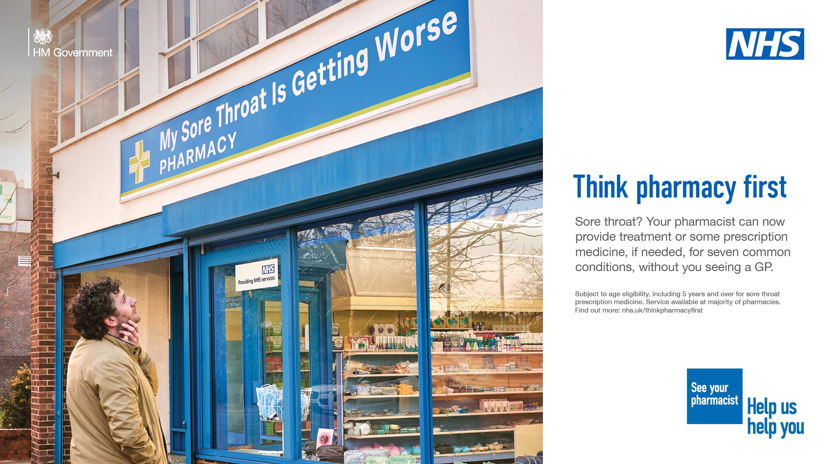
Community pharmacy teams are highly-skilled, qualified health professionals who have the appropriate clinical training to give people the health advice they need. Patients don't need an appointment and private consultation rooms are available. Pharmacy teams can also signpost to other relevant local services where necessary.
Pharmacists have always helped patients, families and carers in their communities to stay healthy and are well-placed to offer treatment for health conditions. By expanding the services community pharmacies offer, the NHS is aiming to free up GP appointments and give people more choice in how and where they access care.
The new expanded community pharmacy service, which also includes initiating oral contraception without the need to see a GP, is also providing more blood pressure check services and is part of the NHS’ plans to recover and improve access to primary care services. It aims to free up to 10 million GP appointments a year once fully implemented, making it quicker and easier for you to access healthcare in our local community and give you more choice in where and how you access care.
After you have had a consultation with the pharmacy, they will send the details through to us on the same day or on the following working day, so that the information is included in your medical record.
Don't wait for minor health concerns to get worse - think Pharmacy First and get seen by your local pharmacy team. More information is available here.
Latest Information Including Countries Affected
The UK Health Security Agency (UKHSA) has detected a case of Clade I mpox in Leeds. This is a more serious type of a rare infection, most commonly found in parts of central and east Africa. Whilst the risk of catching mpox in the UK remains low, it is helpful to be aware of some of the more common symptoms of mpox which include a skin rash or pus-filled lesions that can last 2 to 4 weeks. It can also cause fever, headaches, muscle aches, back pain, low energy and swollen lymph nodes.
What To Do If You Have Symptoms
If you have any symptoms and you, or someone you have been in contact with, have travelled to any of the countries below in the last 21 days, please do not visit a GP or health centre. Instead, call 111 or your GP practice. You will be assessed and referred to the appropriate team.
Countries affected (as at 28 November 2024)
- Democratic Republic of the Congo (DRC)
- Republic of the Congo
- Central African Republic
- Burundi
- Rwanda
- Uganda
- Kenya
- Cameroon
- Gabon
- Sudan
- South Sudan
Considerations is also being given to neighbouring countries at risk, such as:
- Angola
- Tanzania
- Zambia (subject to change - please visit GOV.UK for the most up to date information).
A rash usually appears 1 to 5 days after the first symptoms. It can be on any part of the body, including the palms of the hands, soles of the feet, mouth, genitals and anus.
For more information and a list of symptoms, please check the NHS website.
More information about mpox is also available on the UKHSA website.
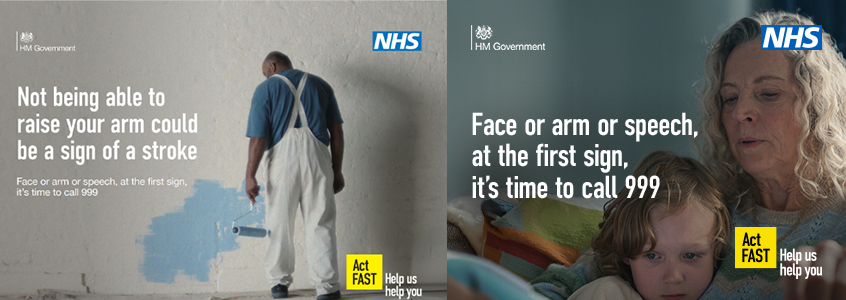
A stroke strikes every 5 minutes in the UK. There are around 38,000 stroke-related deaths every year and it is a leading cause of disability. We are supporting the "NHS Face, Arms, Speech and Time (FAST)" campaign to encourage people to Act FAST, at any sign of a stroke, as every minute is vital to give patients quicker access to specialist treatment that could save their life and reduce the long-term effects of a stroke, such as a disability.
The first sign of a stroke might not seem serious. Like struggling to smile, not being able to raise your arm or slurring when you speak. Stroke symptoms can be less dramatic, painful or obvious than might be expected, but even if doesn’t seem like much, at the first sign of a stroke, call 999 straight away.
The quickest and most direct way to get your repeat prescription request to the GP is by using our online services.
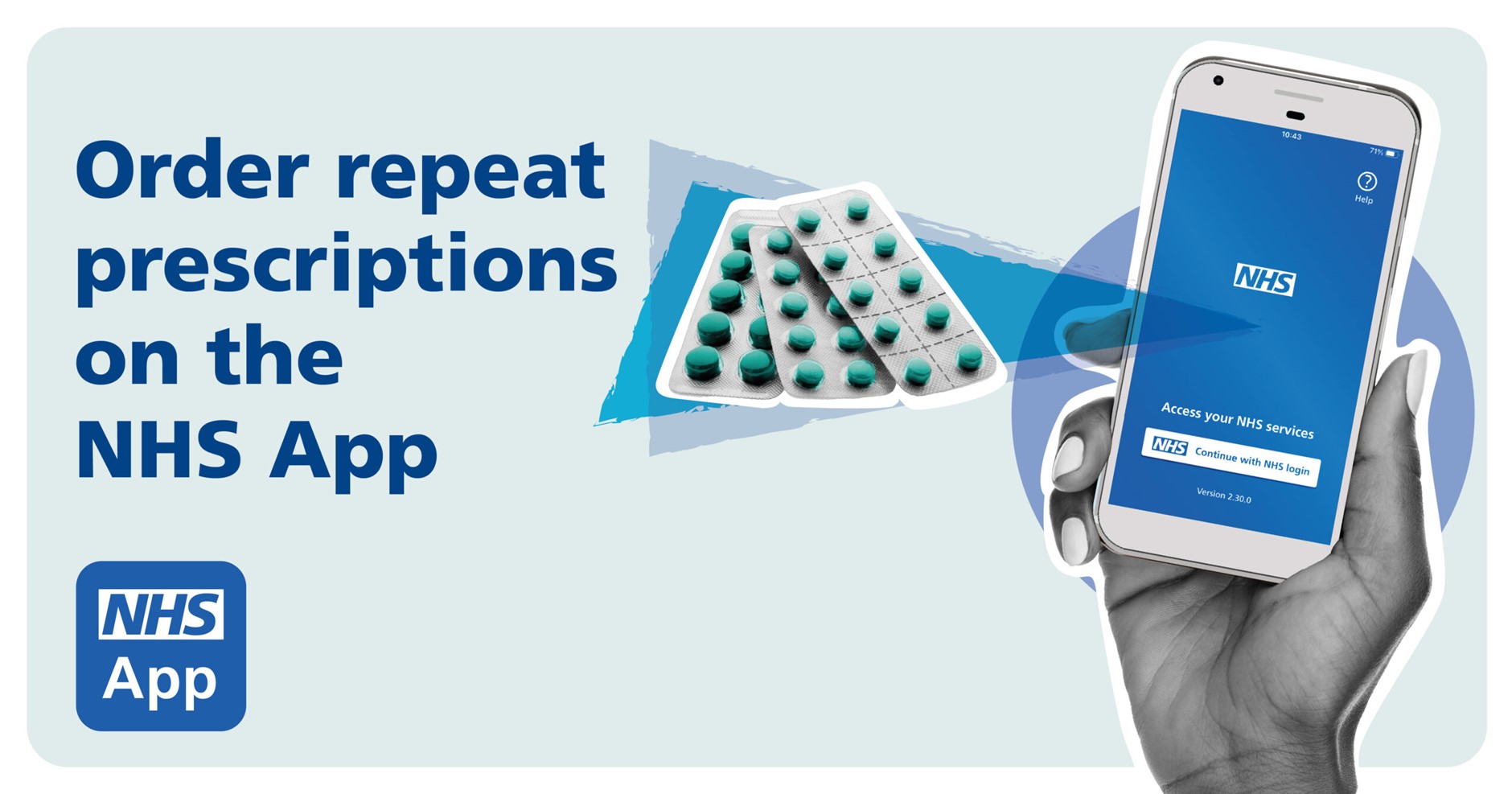
If you are unable to use order your medication online, you can still make your request by post or by attending the practice.